No One Truly Knows His Own Begetting: Nolan’s Odyssey
οὐ γάρ πώ τις ἑὸν γόνον αὐτὸς ἀνέγνω. No one truly knows his own begetting. – Homer, The Odyssey I.215
I begin my last book with this epigraph, which Telemachus says toward the beginning of Homer’s Odyssey. Telemachus speaks of the difficulty of knowing his father. The line also speaks to the themes of the epic of returning to one’s home, of knowing one’s home, of fidelity to one’s own, of the temptations and lures that prevent one from returning home, of home needing constant cultivation and of always threatening to devolve.
To talk about what I take to be the insights of Nolan’s “The Odyssey,” I want to treat it as a movie in its own right. I want to set aside the question of whether it is true to its source material. I realize that is practically impossible to do. So I will weigh in briefly in order to think about the film as its own story.
- I disagree that Nolan leaves out the gods. The gods do show up, as thunder and lightning, as the angry sea, as seducers, as the monstrous source that explains how a father could sacrifice his daughter to make the winds blow. The Greeks invoke the gods to explain why mortals do the unhinged, unpredictable, rash, courageous, wise and foolish things they do.
- I do think that Nolan depicts a more Roman or Anglo-American Odysseus than a Greek one. We fail to appreciate the strangeness of the Greeks and the Romans are much more accessible as they become a template both for Christianity and for American government. Part of that strangeness is that Odysseus is a cunning trickster. The film depicts him as smart. But he is having more fun than being smart. Leaving out the “no one” joke leaves out the sense both of Odysseus’s joy in defeating Polyphemus and of taking credit as he sails off.
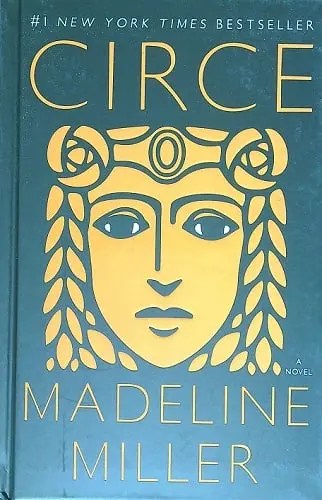
- The Circe scene is a real let down. Madeline Miller does a great job of showing how Circe is a force of nature, able to meet Odysseus wit for wit. Moreover, Odysseus shows up armed by Hermes to ward off Circe with the moly plant, but he nonetheless stays because he is seduced nonetheless. The female characters in the epic have much more character development than Nolan allows.
Back to homecoming. Athena mirrors Telemachus’ line back to Odysseus at the end of the film, “Don’t you recognize your own home?” It is understandable that he does not. Then Odysseus says to Penelope, “It’s not always an easy thing, a homecoming.” I want to speak to two themes: homecoming and guest-welcoming. And I want to speak to how these themes are mirrored and how both speak to a political crisis.
The story is told in large part by Odysseus as he recalls what he has forgotten on the island of Calypso, where he has been for seven years. Away from home, he has forgotten home. He has not only forgotten what home is like, he has forgotten that he has a home. He has forgotten that home has a call to him. One could trace this forgetting to allowing himself to be lashed to the mast to listen to the Sirens’ Song, a song that could be understood as moving cause of Tantallus, that which motivates desire but can never be had. And Odysseus describes the song in that way,
“What you most can’t have is what you already had and lost; the song of all the promises I failed to keep, telling me I don’t really want to go home.”
Nolan made me think that Odysseus doesn’t get the special privilege of listening to the Sirens’ Song and surviving; listening to the Sirens’ Song and surviving is what sets him off course on the road to Calypso. The Sirens’ Song is the lure of what is unreachable and in being unreachable, unreal, the temptation of the apparently exciting turned banal affair, the manifestation of the death drive, the fantasy as such. The Sirens’ Song makes you forget there is a home to return to and then you leap to your death. Leo Strauss in “What is Liberal Education?” reminds us that the Greek word for vulgarity is apeirokalia, lack of experience in things beautiful. The beautiful allows one to tarry with it and live; the beautiful renders one noble. The Sirens’ Song appeals to those with a lack of experience in things beautiful; it entices without satisfaction. Hearing the song and living, Odysseus enters a space in which time does not pass and he has nowhere to go. Fighting his way back to memory, Odysseus fights his way back to the pull of leadership, responsibility and love, which his travels have rendered him incapable of expressing except violently.
Read more