Catching all manner of thought


I'm Chair and Associate Professor of Philosophy at Wabash College in Crawfordsville, Indiana. I work on ancient Greek--mainly Plato and Aristotle--and contemporary European philosophy inflected by social and political concerns. I'm particularly interested in the concept of nature and how historically nature, understood in relation to its apparent opposite of reason, nature, and artifice, has led to conceptions of community that require a founding exclusion. My first book argues that Aristotle's Politicsdraws on a conception of nature that is not opposed to these things and thus not exclusive. My second book considers Aristotle's conception of nature in his account of generation to show the ways that form and matter seem interdependent in the model of a Möbius strip.
I am serious about running. I care about justice, feminism, opposing racism and resisting neoliberalism. I think Socrates was on to something when he suggested thinking was a practice of living. I teach students to think--and to live. I delight in the pleasures of doing the difficult thing.

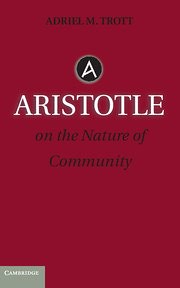
Aristotle on the Nature of Community

 The Trott Line
Oct 16
Comments for SPEP Panel on Online Harassment
These are the remarks I’ll be given at the SPEP Advocacy Committee’s panel on Online Harassment at the SPEP Meeting at Penn State on October 19, 2018.
I was asked to speak on this panel in light of my experience as a series editor at the APA blog. I edit the Women in Philosophy series on the blog. As a series editor and as someone who has been a woman in philosophy on the internet for many years, I’ve spent some time thinking about comment moderation, diverse and inclusive posting, and dealing with trolls. For the record, the views I am sharing here are my own and not mine in any official capacity as part of the APA.
The first point I want to make is that I think blogs meant to serve a community require the same careful and nuanced thinking about what parameters and practices foster inclusive community as the scholarship that philosophers engage in about community requires. I’ve been thinking deeply about inclusive community for almost two decades. I have two points of departure. From Aristotle, I think we learn that community following a certain notion of nature has to remain concerned with what its purpose is and whether it is achieving its end in order to actually achieve it. This purpose is evidenced by who it includes. Aristotle counsels communities to be more just and more stable by being more inclusive. Who a community includes tells you what goals the community pursues and what it thinks is just. Who posts on a blog, whose other posts are linked to, who posts regularly in comment sections, these things tell you what goals the community pursues and what it thinks is just. Read more